As consumers, we’re more like sheep than we’d like to admit – that is, if sheep were tempted to buy food based on “free from” marketing. Gluten-free, fat-free, lactose-free, dairy-free and GMO-free labels are already firmly stamped on many of the foods we buy in shops and restaurants, and are associated with an invisible yet potent, virtuous halo. After all, if a slice of cake is gluten-free, it must be positively healthy.
The latest marketing wheeze appears to be “slaughter-free” dairy production – a 30 cow herd in Rutland, described as a bovine spiritual utopia, where calves are not weaned but run with cows as “grazing partners”; male calves (renamed as ”oxen”) are used for draught power rather than reared as beef; and once cows retire from milking, they are literally put out to pasture rather than being culled.
There’s no doubt that this ticks an entire list of ethical boxes – who doesn’t want to imagine that cows live a happy life browsing the buttercups once they’re too old to produce milk? Yet, given the critical need to produce food sustainably (in terms of economic viability, environmental responsibility and social acceptability), it also leads to a number of questions.
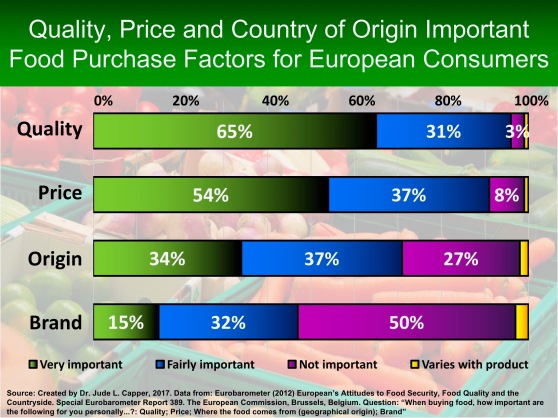
While there may well be a niche market of consumers who are prepared to pay £4.50 per litre for slaughter-free milk; in an era when we primarily choose foods based on price, is this endeavour going to achieve long-term economic sustainability?
The environmental impact of dairy production increases with the proportion of non-producing (dry cows, growing heifers or “retired” cows) in the population – keeping retired cows out on pasture would be expected to add a huge quantity of greenhouse gases to the carbon footprint per litre of milk produced. Carbon footprint and resource use per litre is also negatively correlated with milk production – the low yields associated with this type of hand-milking operation would further add to its environmental impact. How do we, as consumers, balance the relative values of animal welfare and planetary health?

In a system where no cattle are slaughtered, but where cows need to have a calf on a regular basis to produce milk, the herd size will increase exponentially over time. In two, five or ten years time, how will the owners reconcile philosophical arguments against slaughter with the difficulty of supplying enough feed to fulfil the requirements of an ever-expanding herd using a fixed quantity of pasture?
Finally, and most importantly, animal welfare should be the cornerstone of any dairy farm. Euthanasia is upsetting, yet is the only option when animals are too sick or injured to survive. As consumers, we need to take responsibility for the fact that slaughter of both healthy animals (for meat) and sick animals (for humane reasons) is an unavoidable, if unpalatable truth. Just as the recent ban on cattle slaughter for beef in India is going to have negative impacts on food security, economic sustainability and environmental impacts, it’s time that we faced up to the reality of food production and stop thinking that we can have our slaughter-free dairy and eat it!

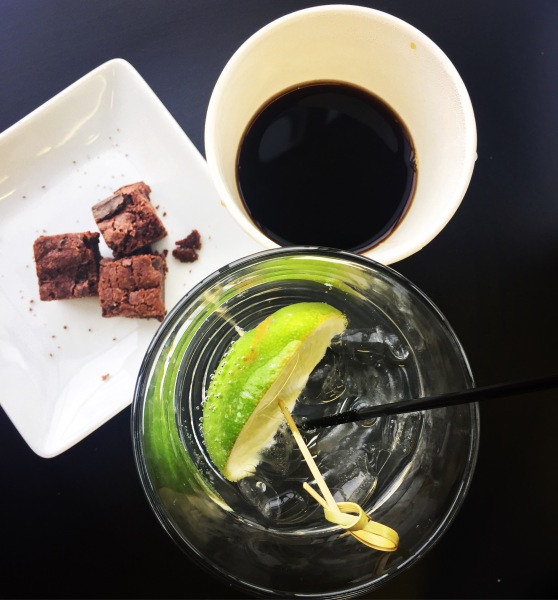 Let’s think about marketing labels. The coffee I’m currently drinking is a new premium blend with fruity notes and hints of lemongrass, the tasting notes so extensive that I was tempted to swill it around and pretend it was a glass of vintage Malbec before the first sip (except I knew I’d end up with a caffeinated tsunami flooding my Mac). The walls of this coffee shop are plastered with buzzwords including “delicious”, “lovers” and “changing lives”. Everything is carefully stage-managed to make me feel that I’ve wisely invested my £2.50 on a cup of branded coffee. Is this coffee more caffeine-laden than the equivalent free-cup-with-a-loyalty-card from Waitrose? Can I detect the top notes of passion fruit? Does it use less water than freeze-dried instant coffee? Will I leap tall buildings with a single bound after drinking it? Absolutely not. Yet the marketing involved makes me feel good about my choice of coffee chain and beverage, without providing any factual information to facilitate my decision.


 Bovidiva