Low Meat, Faux Meat or No Meat – Should Retailers Really Reward Us for Buying Vegetarian Foods?

All food have an environmental impact

There’s no doubt that eating more fruit and vegetables is a positive idea. Nationally we still don’t hit our 5-per-day and lifestyle diseases are major causes of premature death. However, as Sainsbury’s redesigns aisles to try and convince shoppers to swap meat for vegetables and plans to issue extra loyalty points to customers choosing vegetarian foods, are we in danger of applying myopic solutions to a seriously complex issue?

Most people in developed countries eat more than the recommended 70 g of meat per day. If (and this is debatable) the researchers who claim that meat consumption is linked to lifestyle disease are correct, then reducing the amount that we eat may be a positive step. However, much of the justification for cutting meat consumption appears to be on the basis of reducing environmental impacts.

So how do we ensure that we eat a diet with a low carbon footprint? It’s very simple. Drewnowski et al. (2015) showed that grains, syrups and sugars had the lowest carbon emissions per kg of food – considerably lower than meat and dairy products. So we simply reduce the proportion of meat and increase the quantity of sugar that we eat each day. Just replace meat products with Mars bars and golden syrup and we’ll save the planet, albeit in conjunction with a spike in type II diabetes and a significant protein deficit.

If Sainsbury’s is determined to reward consumers for making healthier choices, why not do so based on the proportion of fruit, vegetables, lean protein and dairy purchased vs. cakes, biscuits and crisps; rather than giving extra loyalty points for vegetarian products? After all, a snickers bar or a packet of oven chips are both vegetarian, but meat-free foods are not inherently healthy choices. Furthermore, where do fish and dairy fit into the new regime? Given the low nutritional value of soy and oat juices per unit of greenhouse gas emissions compared to dairy, the potential for child malnourishment is considerable if plant-based foods are mis-sold as being nutritionally-equivalent to animal products.

Bipolar “A is bad, B is good” panaceas do nothing to improve consumer knowledge of food production or environmental impacts. Strawberries may have a lower carbon footprint than beef, but cannot be grown on a rocky slope in Scotland. Pork may have a relatively high water footprint, but almonds use even more. Lettuce is a great source of fibre, but provides very little additional nutrients per kg compared to meat. In my experience as an ex-vegan, the majority of vegan restaurant dishes are largely reliant on pasta or rice to bulk out the vegetables. Is this really a healthier choice than lean meat and vegetables? Given that many young people have little or no interest in cooking, is the presence of spiralised courgettes or cauliflower rice at the end of the aisle going to engender a sudden interest in all things gastronomic?

Most people’s diets are led (to a greater or lesser extent) by the foods available in the local supermarket, therefore retailers have huge opportunities to educate, encourage and improve our food choices. It’s not clear why Sainsbury’s would choose to launch this initiative, but it appears to be a box-ticking exercise, designed to address a single minor issue while ignoring the bigger problem.

Big, Small, Local, Artisan… Why We Need to Kick the Food and Farming Label Habit

coffe-water-and-brownieLet’s think about marketing labels. The coffee I’m currently drinking is a new premium blend with fruity notes and hints of lemongrass, the tasting notes so extensive that I was tempted to swill it around and pretend it was a glass of vintage Malbec before the first sip (except I knew I’d end up with a caffeinated tsunami flooding my Mac). The walls of this coffee shop are plastered with buzzwords including “delicious”, “lovers” and  “changing lives”. Everything is carefully stage-managed to make me feel that I’ve wisely invested my £2.50 on a cup of branded coffee. Is this coffee more caffeine-laden than the equivalent free-cup-with-a-loyalty-card from Waitrose? Can I detect the top notes of passion fruit? Does it use less water than freeze-dried instant coffee? Will I leap tall buildings with a single bound after drinking it? Absolutely not. Yet the marketing involved makes me feel good about my choice of coffee chain and beverage, without providing any factual information to facilitate my decision.

Like it or not, marketing labels are ubiquitous, exclusive and bipolar. Black and white. Yes or no. Good or bad. Even in the scientific world, where we’re renowned for caveats and “Under this specific set of conditions we saw a significant difference in X although that can’t always extrapolate to Y….” answers to questions, media coverage of scientific research is becoming binomial. Food X will kill you. Eat food Y and you won’t get cancer. Shades of grey have ceased to exist.

Back in September 2016, Jayson Lusk published an excellent piece in the NY Times explaining the importance of technology use on modern, large-scale farms. The only issue (for me) was the title: “Why Industrial Farms Are Good for the Environment”. The supposition being, of course, that we have to dispel the myth that “industrial” farms are environmentally-undesirable. Yet using terms like “industrial” have deeper connotations – if a large farm is industrial, is a small farm artisan? If a dairy herd containing 100 cows is a “factory farm” (regardless of familial ownership or management), is the one that contains 99 cows a small, vibrant, local business? Is a farmer who is passionate about pasture management, reducing nutrient run-off and promoting biodiversity a saviour of the planet, regardless of whether he/she produces enough beef to feed one family or 5,000 families (approximately 1,700 cow herd) per year? There are as many farming systems worldwide as there are farmers – trying to apply broad categories (“big vs. small” “factory vs. humane” “grass-fed vs. grain-fed”) tells us absolutely nothing about the management practices, animal welfare, environmental sustainability and social responsibility of a particular farm.

Perhaps it’s time to take a evidence-based approach. The consumer absolutely has a right to choose products from agricultural systems that they prefer, yet this needs to be provided via factual, quantifiable information rather than marketing buzzwords. Being told that a piece of pork pie is “artisan” or that Supermarket X’s beef mince costs 20 p/kg less does not facilitate informed decision-making.

If we assume that all other factors (including price) relating to food purchase are equal:

  • Eggs from Farm X are ranked 9.5/10 on supporting the local community
  • Eggs from Farm Y have an animal welfare rating 10% higher than average
  • Eggs from Farm Z eggs have a carbon footprint 25% lower than average

I wonder how many consumers choosing eggs based on measurable performance outcomes would be supporting a different production system than the one that they perceive to be best? We (as an agricultural industry as well as in the role that we all play as consumers) need factual information on labels rather than marketing buzzwords.

We would also have a better understanding of the issues that really are important to the consumer. I was recently asked whether I was concerned about antibiotic use in livestock. The obvious answer was “Yes”… yet my main concern was the challenge of eliminating the use of medically-important antibiotics (while maintaining access to veterinary antibiotics that have no impact on human medicine), reducing antimicrobial resistance and improving the health and welfare of global livestock populations through alternative technologies and management practices. Not surprisingly, my answer didn’t fit with the assumed “I’m concerned because everybody knows that farmers massively overuse antibiotics as a panacea for poor management” rationale.

Recent data from a global charity suggests that almost 90% of Indian consumers are deeply concerned about cattle health and welfare on dairy farms. Great. Does this mean they’d pay more for milk to improve dairy cow welfare? That they were given factual information about dairy production? That they understand the relative environmental impacts, cattle health issues and social impacts of various dairy systems? All unlikely. We face a number of challenges within agriculture – notably the need to produce enough safe, affordable food to feed the growing population, whilst using fewer resources and with a lower environmental impact. We cannot and should not expect to make informed decisions on food choices based on marketing buzzwords – it’s time to stop differentiating on farm size or system and examine real farm impacts.

The Future’s Bright; The Future’s…Meaty? A Response to Breakthrough’s Essay on Meat Production

jims-charolais-in-feedyardThis week I was asked to respond to an excellent Breakthrough article on the environmental impacts of beef production. As ever, I hope the comments below provide food for thought (pardon the pun) and I urge you to read the full Breakthrough article as well as the other comments by Jayson Lusk, Maureen Ogle and Alison van Eenennaam.

Every food has an environmental impact, whether it’s cheeseburgers or tofu, coffee or corn.

That shouldn’t come as a surprise to any of us and, as a scientist, sustainability consultant and parent, I don’t have a problem with food production being one of the biggest contributors to global environmental impacts. Why? Because food production is one of the few industries that are absolutely essential for human life. However, it’s clear that we need to take steps to reduce environmental impacts from human activity, and as such, the livestock industry is often criticised for both resource use and greenhouse gas (GHG) emissions.

Although meat production is predicted to increase from now until at least 2050, it should be noted that the trends for improved productivity and efficiency within global livestock industries also reduce environmental impacts. As described in Marian Swain’s essay on meat production, the US beef industry cut resource use and greenhouse emissions considerably between 1977 and 2007. Meanwhile, the rise of modern feedlot-finishing systems cuts land use, water use, and emissions per unit of beef compared to grass-finished meat.

These findings may seem intuitively incorrect as we’re constantly exposed to marketing and media messages suggesting that only grass-fed meats are environmentally sustainable, and that intensive livestock systems are undesirable. The data speak for themselves however—the majority of extensive systems finish cattle at lighter weights (thus requiring more total animals to maintain beef supply), have lower growth rates (so cattle take longer to grow to their finish weight) and often have lower reproductive performance in female cattle.

All these factors combine to increase environmental impacts. But when I presented this data to a group of French Masters-level Livestock Engineering students earlier this month, they were (in their own words) shocked. Even among experts and students, there remains a great deal of misunderstandings when it comes to meat production.

Does this mean that every beef producer worldwide should embrace feedlot-finishing and reduce pasture use? Absolutely not. One of the major benefits of cattle compared to swine and poultry is that they digest and use human-inedible forages, such that dairy and grass-fed beef cattle actually produce more human-edible protein in the form of milk and meat than they consume; and feedlot-finished beef cattle have a ratio of human-edible feed intake to human-edible protein output similar to that of swine, despite their greater overall land use. In keeping with the themes discussed in the Swain’s essay, there is no magic bullet—it is essential to fit production systems to the cattle, climate, market, and culture within each region and to improve productivity within each and every system.

So rather than reducing animal protein consumption as we move towards 2050, we might ponder keeping total consumption relatively stable, with a more equitable distribution across the globe? This would allow for a decrease in over-consumption in high-income regions, while providing a greater quantity of milk, meat, and eggs to those who have dire need for adequate animal proteins to maintain health and to promote adequate child growth and development. While the environmental impact of beef production is a key concern, we also have to examine the role of livestock in economic and social sustainability.  For billions of small-scale farmers, cattle provideeconomic viability, improved nutrition, social status and a means to diversify agricultural production as well as tangible benefits in terms of fertilizer, hides and other by-products.

Should we insist that global beef production is abandoned in favour of increased legumes, nuts or lab-created proteins? No. We simply need to give producers worldwide the education, tools and technologies to make the best and most efficient use of their resources. Only then will we have a truly sustainable (environmentally responsible, economically viable and socially acceptable) global meat industry.

Having Your Beef and Spending It? Don’t Let Moral Indignation Overcome Common Sense.

My Twitter feed has lit up like a firework this week with the news that cows are being murdered to produce the new plastic British £5 notes. Or, to correct the sensationalism with science, the notes contain a trace of tallow in the polymer that’s used to make them. Tallow is a by-product of beef production – it’s effectively the fat on the animal that we don’t want to eat, and has been used for centuries in a myriad of products.

Let’s be very clear here. No cows are being slaughtered (murdered!) to make £5 notes. Cattle are either slaughtered for meat or euthanised due to illness – there are no Bank of England-sanctioned posses stringing up helpless cattle as a license to print money (literally). Fortunately, we are able to use the portion of the animal’s carcass that we can’t (or won’t) eat to manufacture products that would otherwise rely on synthetic chemicals.

Not surprisingly, the majority of the outcry has come from vegetarians and vegans. While I will defend the right of anybody to choose what they eat or wear (note that I am not criticising or denouncing anybody’s religious beliefs here), the current protests seem to be slanted towards choosing to be offended by a minor point, rather than any semblance of logic.

According to a rather nifty (yet accurate) calculation by the guys at Vice, it would take 23 kg of tallow to make all the new £5 notes that will be in circulation by the time the old ones are phased out. The total tallow yield per animal is ~40 kg, so it would take just over half of one animal (23/40 = 0.58) to produce all the tallow for the UK’s total £5 note requirements.

5-noteMany of those who are protesting are vegetarian (as opposed to vegan), thus still consume milk, eggs, honey and other non-meat animal products. Given that 20% or more of the cattle slaughtered in the UK are adult cows and bulls (i.e. they have reached the end of their productive life in the dairy or beef herd rather than being specifically reared for meat), it makes sense to utilise whatever components of their carcasses are suitable for industrial purposes rather than diverting them into landfill or incinerators. If dairy consumption is acceptable to vegetarians, can it really be claimed that bank notes containing a fraction of the spent dairy cow’s carcass as tallow are not?
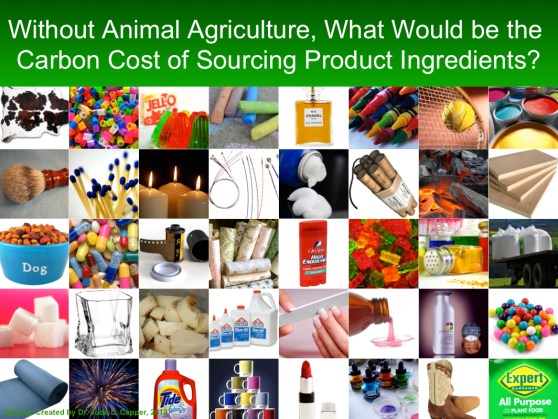
by-products-from-animal-agAs I have mentioned in previous blog posts, myriad everyday products contain by-products from cattle. Given the current outcry, once can only assume that those who shun the new £5 notes also refuse to travel in cars, buses or on bicycles (as (t(as tyres contain stearic acid, again from tallow); do not drink from bone china mugs; or disavow beer filtered through isinglass. Or, as with so many other issues, is it an opportunity for a small minority to protest and promote their personal dietary choices behind the guise of population-wide offence?

The online petition against the new £5 notes currently has >129,000 signatures. Obviously we all have the right to protest against issues that alarm, anger or offend us, and social media gives those opinions far greater weight than we had in the past. Yet is this really an issue that is more important (as judged by media coverage) than 11-year-old girls being forced into marriage? Or livestock being slaughtered without first being stunned? Or asylum seekers being refused entry? Perhaps in this case, the moral minority need to examine the bigger picture, and consider the issues that really matter.


We Consume, Therefore We Are?

banned-consumerI consume, you consume, he, she or it consumes. Whether we’re buying a coffee, a bacon sandwich or a new iPad, we are consumers of goods and services every single day. Indeed, as you read this, you are consuming electrical energy, internet data and/or printer ink and paper. Aside from the very few within our society who are genuinely self-sufficient, we are all consumers – a word that should not carry negative connotations. In a world where most of us consider that we need more than a jute sack and some potatoes dug straight from the earth, we consume, therefore we are. There’s a growing movement towards consuming less (food, resources, luxury goods), yet this doesn’t mean that consumption is a negative attribute.

However, some state that using the word “consumer” creates a divisive “us and them” situation within food production, where the agricultural industry is pitted against consumers in a battle for supremacy. Proposed alternatives to consumer include “customer”, “client” or, according to one tweet addressing this topic, “just call ‘em people, we’re all people”. There’s no doubt that we’re all people, but is this just ignoring the real issue in favour of a panacea?

consumer-tweet

I freely admit that I know nothing whatsoever about car manufacture. Would I be insulted by a marketing campaign from Toyota or Ford where they tried to better inform the consumer about the various ways that vehicles are made? Not in the slightest. I have a car, I am a consumer of vehicular goods, but (and this is where the semantics come into play) I am not a “customer” of either Toyota or Ford (proud Vauxhall owner). If I suspect that the car industry is full of evil overlords intent on exploiting child labour, destroying safe water supplies and inflating the price of replacement windscreen wipers, am I going to be mollified by being called a customer, client or person? No. Similarly, somebody who believes that dairy farmers rape and murder their animals or that large-scale agriculture is inherently undesirable is not going to change their views because they’re called a person rather than a consumer.

trent-tweet

I have some friends within agriculture who genuinely believe that the consumer is their enemy. They consider that they should not have to change any facet of their farming system in order to fit with market demand, but that the ignorant (their words, not mine) need educating so that they can accept farming practices. Would changing the word consumer to customer, client or person facilitate a more diverse and accepting outlook from these producers? I think it’s highly unlikely.

It’s time to address the issues that matter. Why do we have such a disconnect between the consumer and the agricultural industry? How can we reach out to urban communities and help people to understand what happens on farms and ranches? How do we regain consumer trust where it has been lost, and enhance it where we already have a good reputation? Not easy questions to answer, but far more important to the future of food production than simply changing terminology. Without shared values and positive conversations, we cannot hope to enrich consumer opinions about agriculture – it’s time to start the conversation rather than hiding behind buzzwords and marketing hype.

How Will We Produce Food Without The “Greedy Farmers?”

imageAn op-ed in the Times titled “Time to Cut Our Greedy Farmers Down to Size” (full article here) has my Twitter feed venting bile like a dyspeptic volcano. According to Ms Duncan, Brexit and consequent independence from the Common Agricultural Policy (CAP) means that “The vast majority of British people will benefit. That’s not just because the money that now goes into farmers pockets (in terms of subsidies) can go into the NHS instead, but also because Britons will pay lower food prices.” Cutting subsidies is seen as a positive because “…farming will shrink and land prices will fall” allowing housing to be provided where it’s desperately required. As one Twitter friend commented, I bet there’s millions longing to have the opportunity to move to a new housing estate halfway up a Welsh mountain.

It’s relatively easy to sit at a desk and earn a living using nothing but your brain and a laptop. Waitrose is fully-stocked with quinoa; the barista at your local Starbucks starts your skinny vanilla latte as soon as you walk in; and if your op-ed doesn’t get picked up by the broadsheets, well, there’s always another day. The maintenance costs for your business are low, there’s no need for specialised housing, feed, veterinary care or staff for your laptop, and a single unproductive day doesn’t have an immediate and knock-on effect on the viability of your business. Compare that to farming, where missing a difficult calving; not being able to harvest due to torrential rain or having two staff off sick could wipe out a week’s potential (potential being the operative word) profits and it’s less easy to sit and mock.

Do inefficient farms, propped up by subsidies exist? Yes. Could British agriculture exist without them? Absolutely. However, these don’t represent the majority of producers. Milk prices dropped by 15.1% in the past year – an average 3.64 pence per litre decrease. At present, costs of producing milk (25-33 pence per litre) outweigh the returns for most producers. Not surprisingly perhaps, AHDB data shows that the number of dairy producers in the UK has fallen from ~14,600 in 2005 to 9,538 in 2016 – a 35% decrease. A proportion of that can be allocated to natural wastage conferred by a combination of an aging farmer population and herds being consolidated into larger operations, but the frequency with which herd dispersal sales are advertised in the farming press is frightening. In an industry where farms are often supported or kept in existence by one or more owners having off-farm employment, the hackneyed image of rich farmers spending all their time shooting pheasants and barrelling around country lanes in brand-new 4x4s needs a sharp shock from a cattle prod.

Nobody yet can predict the full economic impacts of Brexit, though I predict we’ll going to have an even greater drop in dairy farm numbers by next year. However, the implication that we’re going to be returned to a sunny bucolic Britain where poppies bloom amongst the wheat, maize is forgone in favour of rewilding and farmers only graze one ewe per 50 acres is arrant nonsense. Yes, the countryside looked very different hundreds of years ago, but in 1900, when there were only 38 million people in the UK and the average lifespan was 47 years, it was easy to feed everybody (or rather those who had the income to buy food rather than poaching from estates) from an extensive, inefficient system.

Want cheaper food and don’t give a damn about British farmers? Be careful what you wish for, Ms Duncan. An island nation with an agricultural industry in decline is utterly reliant on food imports from overseas – is this really the (CAP) “independent” future that we want for our children?

Cows, Cows, Everywhere, and Not a Steak to Eat. What Happens if We All Become Vegan?

P3052365

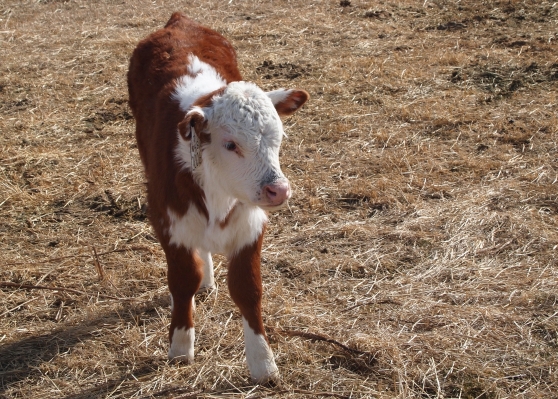
Hereford calf – innocent victim of our murderous lust for meat?

I have previously blogged about the potential impact of us all becoming vegan with reference to the U.S. beef and dairy industries, but given the recent haranguing of several Twitter friends (and myself) by some very passionate vegans, I thought it was worth updating the post for the UK livestock industry.

Let me make it very clear – I am totally happy for anybody to choose whichever diet they prefer: omnivore, vegetarian, vegan, flexitarian etc. No problem. I have to admit I find it interesting when people claim that they are vegetarian but that they occasionally eat meat (5% of Australians consider themselves as vegetarian but only 2% eat a meat-free diet!), but it’s great that we are able to choose from a wide variety of diets and foods. However, I get really irritated when people suggest (or insist) that I shouldn’t eat meat or fish because they believe that it’s morally wrong. Food has almost become a modern faith issue – the same intensity and fervour of 19th century missionaries trying to convert “heathens” is applied by the more activist vegetarians and vegans.

Meat-free Australia

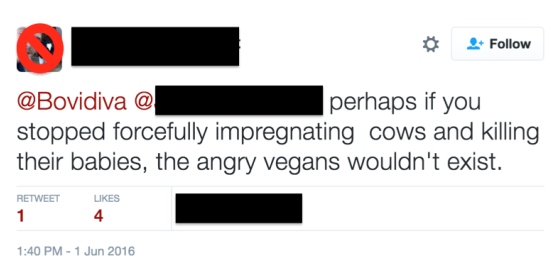
Interestingly, every single vegan I have conversed with on Twitter appears to believe that cattle only reproduce because they are forced to by the farmer. Accusations such as the one in the tweet below are common – because artificial insemination is regularly used within the dairy industry (although a significant proportion of dairy farmers also use bulls for natural service), cows are seen to be “forced” to breed, or even “raped”.

Angry vegan

So, if we as a vegan population did not eat milk, meat or eggs and did not “enslave” or control cattle, but instead turned them out to live a natural life, would they cease to breed? It’s a nice idea, but, it’s false. If a bull has access to cows in heat, he’s going to pursue that cow, even if it means breaking into the next field. Cattle don’t breed like rabbits, but bulls are rather akin to hormonal teenagers when responsive cows are in close proximity.

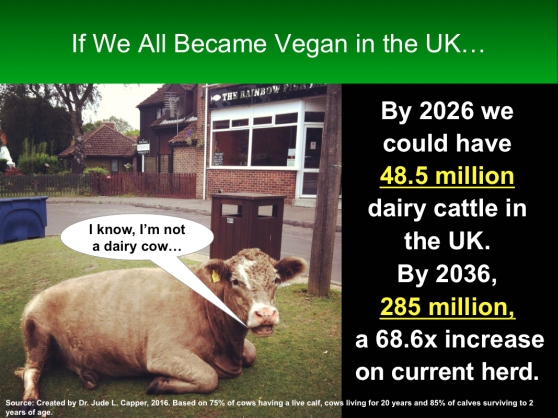
Anti-animal agriculture activists often purport that a cow can live for 20+ years in her “natural” state compared to a farmed animal – so being a data nerd, I did the maths. Let’s assume that we turn all the dairy cows out tomorrow, and the following assumptions hold true: 1) cows first calve at two years of age and that 75% of cows have a calf every year*; 2) 85% of those calves survive (calf mortality would increase because we would not care for (exploit?) new-born calves); and 3) each cow or bull lives for 20 years. Admittedly that doesn’t account for the cattle that would be hit by cars, or die from starvation through lack of available grazing in 5, 10 or 20 years time, but being good vegans, we’d feed them, right?

If we all became vegan - UK


We currently have ~4.2 million dairy cattle (1.9 million dairy cows, plus calves, heifers and bulls) in the UK. Within five years we’d have 19.2 million cattle in the UK, within 20 years we’d have 285 million – a 68.6-fold increase on our current national herd. That’s 68.6x more cattle belching methane, drinking water and producing waste, every single day, all as a result of our changing our diet in a misguided attempt to reduce environmental impact.


It’s a nice, simplistic, oft-suggested argument that we shouldn’t eat meat or dairy products in order to save the planet, yet the conflict between veganism, animal welfare, and environmental impact is clear. Climate change will be solved by us turning vegan? Not unless we reconcile ourselves to killing animals without eating them.

*75% would be a low calving % on a beef or dairy farm, but let’s assume that natural service in the wild is less efficient 

If We Can Replace Antibiotics with Homeopathy, then Cheese is the New Miracle Cure!

IMG_1903 cropIn the Guardian this week, HRH Prince Charles proposed homeopathy as a solution to antibiotic resistance, citing his “agro-ecological” farm as an example of one that has cut antibiotic use by using homeopathic treatments.

Given the concern over bacterial resistance to medically-important antibiotics, it is vital that we find alternatives. Yet they also must have a biologically sound mode of action and be proven to be effective. It is difficult to conceive how a solution so dilute that not one molecule of active ingredient remains, where the premise of the mode of action depends on water having a “memory” of the ingredient (as opposed to all the other contaminants within that water), can possibly have any verifiable impact on disease. Indeed, there are no studies to date that show positive, replicable effects of homeopathy compared to conventional treatment.

Personally, I have no issue with any alternative therapy has been shown to be an effective alternative to conventional drugs (note that homeopathy does not fall into this category). When I underwent chemotherapy for breast cancer, I had some reiki sessions. Did I believe that energy was being channeled by the reiki healer and making me better? Honestly, no. Would I have ever considered giving up the chemotherapy? Absolutely not. But the focused breathing and relaxation certainly helped with pre-chemo anxiety. Would taking Rescue Remedy or a similar homeopathic preparation have helped? If I’d believed that it would – yes, probably. But that is biased by the placebo effect – it’s not the same as the treatment being independently effective. One of the claims made for using homeopathic treatments in animals is that they are independent of the placebo effect – they don’t have the expectation that the tincture administered is going to cure their lameness or mastitis. Yet when we assess the results, it’s not the animal who’s reporting the success or failure of the homeopathic treatment, it’s the farmer.

So let’s examine a scenario. A farmer has two mildly sick cows (e.g. slightly lame, or unwilling to eat with a raised temperature) within the herd. Both are moved to the hospital pen, given fresh bedding, water and feed plus a homeopathic remedy. Cow A gets better – hoorah for homeopathy!  Cow B doesn’t and has to be treated with antibiotics – boo! Does this mean homeopathy works in 50% of cases? No. There’s no control treatment here, no evidence that Cow A wouldn’t have got better without homeopathy – some diseases just need time, TLC and the cow’s own immune system for recovery. Did the farmer cut antibiotic use? Yes – Cow A didn’t receive it. Yet again there is no evidence that this is due to the homeopathic treatment. How many times have we as humans debated whether to go to the doctor because of a minor ailment, then have found that it’s cleared up without medical treatment? It’s not miraculous, it’s simply our immune systems functioning as they are intended to.

In the absence of controlled experiments that compare homeopathic treatments to both conventional antibiotics and no veterinary treatment (save for good animal husbandry), it is disingenuous to claim that homeopathy is successful in treating bacterial disease or can effectively be used to replace antibiotics. We need to look to veterinarians and scientists when making decisions about animal care and treatment rather than relying on anecdotal data from those with royal connections. After all, HRH Prince Charles may have reduced antibiotic use on his farm, but I can also claim to have reduced antibiotic use in my household through dairy consumption – my toddler has a serious cheese addiction and has never had to take antibiotics. Hoorah – cheese is the new homeopathy!!*

(*obviously I am being sarcastic here for those who missed it, though the extent of cheese consumption and fact that she’s never had antibiotics are both entirely true)

Where’s the Beef? Not in Danish Diets.

Culvers burgerFor those of us in the UK, mentioning Danish livestock production almost inevitably leads to thoughts of Danish bacon (be still my beating heart) – a considerable proportion of their 90% of domestic pork products that are exported. However, any beef lovers in Denmark may be in trouble, as recent news articles suggest that red meat (beginning with beef) will soon be taxed in order to cut consumption and meet greenhouse gas targets.

Despite the number of voices clamouring for reduced meat consumption, it seems clear that the average consumer isn’t going to forgo meat and dairy simply because a new study is publicised in the lay press. I’m firmly of the opinion that the only way that meat consumption will decline is if it becomes too expensive to include in the weekly shopping basket. Indeed, although meat consumption per capita has declined in the USA over the past 10 years, demand (as measured by the price that the consumer is willing to pay) has increased over recent years.

So will taxing meat lead to a reduction in consumption? For those who routinely order a 16 oz (454 g) steak in a restaurant or think nothing of tucking into a chateaubriand, probably not. High end cuts of beef are associated with celebrations and luxury dining, and going out for a broccoli pasta bake just doesn’t have that same ring to it.

However, we live in a world where 793 million people (10.7 % of the global population) are undernourished – and that isn’t simply confined to people in developing regions. That means that almost 1 in 9 people do not have enough food. To low-income consumers, food availability isn’t simply a function of what is on the shelf in the supermarket, it’s directly related to economic cost and convenience. If red meat is taxed, it will still be eaten, but there will be a disproportionate shift towards consumers with a greater income and away from those who are in most need of affordable high-quality protein, including growing children.

Do beef alternatives exist? Absolutely – protein can be supplied from other meats, fish or vegetable-based foods. Yet here’s where the convenience aspect comes in – most of us can probably think of a quick and easy recipe involving beef, but how many can you think of involving tofu or lentils? That’s not to say that we shouldn’t expand our cooking repertoires, but when time is at a premium, quick easy recipes that will feed a family win every time.

If beef becomes unaffordable, it will have to be replaced by another protein – but this substitution does not occur at zero cost. Can tofu or lentils be produced on low-quality pastureland where we can’t grow other human food or fibre crops? Do pork or poultry make such efficient use of forages, pastures and by-products from human food and fibre production that, far from competing with humans for food, the animals produce more human-edible energy or protein than they consume? No. The only livestock that do this are those pesky greenhouse gas-belching bovines.

Greenhouse gases are important, but they are not the only factor that we should consider when advocating for sustainable dietary choices. In a world where millions of people are food-insecure, removing a protein choice from the table of those with low incomes simply adds to the problem of how to feed the world – sustainably.

Seeing the Bigger Picture – Why One-Dimensional Panaceas Do Not Solve Sustainability Issues

This week, another paper has been released claiming that we should change to a vegetarian diet in order to “…cut global food emissions by two thirds and save millions of lives“. As ever, media coverage of the paper by Springmann et al. ignored salient points regarding the importance of increasing fruit and vegetable consumption and reducing energy intake in reducing deaths from heart disease, cancer and diabetes; and simply focused on the claim that reducing meat intake would improve health and cut greenhouse gas emissions (GHGs). The simple message to the consumer? Go vegetarian.

So are GHGs the only important environmental metric? Absolutely not. What about land use? Air quality? Fossil fuel consumption? Water use? Biodiversity? The myopic focus on GHGs as the only arbiter of environmental sustainability completely ignores these factors, yet the results of the current study (and similar papers) are promoted worldwide as a panacea to solve all environmental issues.

Can you imagine a world where we only look at one consequence of our actions? Where our only consideration when buying a car is the colour of its paint? Or the criteria for accepting a new job is whether they have good coffee in the canteen? Surely a ridiculous idea – all of our actions have direct and indirect consequences, some predictable, some entirely unforeseen, and we weigh up these outcomes with every decision that we make – including dietary choice. If we examine a number of the assumptions and recommendations within the current paper, it’s apparent that the negative consequences of the one-dimensional GHG focus may outweigh any benefits gained.

Although a regional approach was used to assess population health impacts, greenhouse gas emissions in the paper were based on reference values for various foods, with the inherent presupposition that all livestock production systems are equally productive and efficient. This is a fatally-flawed assumption. If we take beef as the example: in the USA, 90% of cows have a calf every year, cows first calve at 24 months of age and growing cattle are slaughtered at 15 months of age. By contrast, in Brazil, 60% of cows have a calf every year, cows first calve at 36 months of age and growing cattle are slaughtered at 42 months of age. Both systems are suited to the resources and market available, but have wildly different efficiencies. Consumption of a US-produced steak (16.7 kg CO2/kg) will therefore have a far lesser contribution to the average person’s carbon footprint than a Brazilian steak (62.0 kg CO2/kg).

All food have an environmental impact

Replacing milk, meat and eggs with plant-based foods (legumes, nuts, etc) is entirely possible, yet it does not occur at zero environmental cost. Every single food that we consume has an environmental impact, and although the greenhouse gas emissions associated with a unit of lettuce or beans may be less than pork or beef (asparagus is a notable exception), the land required to produce equivalent energy or protein from plants is significant.

We cannot simply remove cattle from the low-quality range and pastureland that they occupy in the majority of grazing regions and assume that we can plant brussels sprouts or soybeans instead. Only a small percentage of pastureland is productive enough to produce human food or fibre crops (8.0% in the USA and 10.8% in the UK). The fact that pastureland would have to be converted to cropland, releasing sequestered carbon dioxide to the atmosphere and increasing the use of fertilisers and irrigation water, was not accounted for in Springmann et al.’s study. Indeed, from where would we source fertilisers for crop production if we significantly cut meat consumption and thus livestock populations? Is an increased reliance on dwindling reserves of inorganic N, P and K really a sustainable solution?

Finally, and most importantly, cattle do not simply exist as a source of milk or meat. In many developing countries, immense cultural significance is placed upon livestock ownership and ruminant animals play a vital role in supplying draught power, capital assets and agricultural enterprise diversification. Should a single mitigating factor for reducing GHG emissions overcome the moral obligation to support and assist subsistence farmers in developing regions? It’s vital that we take a holistic view that encompasses environmental responsibility, economic viability and social acceptability in order to improve food system sustainability rather than simply focusing on one aspect of the problem. Rather than taking a whole-system approach to environmental and human health, the study by Springmann et al. is akin to amputating both legs in order to try and cure arthritis. Short-term pain may be reduced, but long-term suffering is inevitable.