
Do Moms Have Instant Beef Credibility?

TrustI spoke at the International Livestock Congress back in January 2012, and at the end of the day, had the pleasure of listening to a couple of distinguished industry colleagues wrapping up the day’s talks in Q&A format. The conversation went thus (with names changed to spare the blushes of the individuals concerned):

Dr. R: “Jude Capper talked about the importance of having credible industry spokespeople to communicate with consumers – how do you suggest that we improve the image of beef sustainability?”

Dr. S: (hitches up his pants, stands up straight): “Well, Jude Capper is credible because she is female…” (pause while the shoulders and eyebrows of 50 or so female graduate students in the audience almost hit the ceiling) “…and she’ll be even more credible when she has children.”

If any one of those graduate students had a gun, a knife or even a sharpened pencil, I think it’s a safe bet that Dr. S would not still be on this earth – the air was so thick with “How dare that chauvinistic old man SAY that?!” it was like spending a weekend in a cigar bar. Yet Dr. S was absolutely right (although he’d probably have fewer voodoo dolls created in his image if he’d explained his statement) – female scientists, especially those who have children, are trusted by female consumers more than the traditional scientific image of an older man in a white lab coat. Why? Well it’s all about how we relate to others. We’re more likely to trust people who seem more like ourselves (age, ethnic group, profession, socioeconomic class) than those with whom we perceive we have little in common. It’s therefore not surprising that recent research (graphs below) shows that we trust our friends and families more than we trust the media, TV shows (take that, Oprah!) or politicians.

Early baby bumpI’m excited to announce that I’m gaining credibility by the day…pound by pound…literally. At almost 7 months pregnant, the most popular question I have at conferences is still “How do I communicate this information to the consumer?”, but it’s swiftly followed by “When is your baby due?”. My baby bump has given me more opportunities for conversations about the importance of beef in pregnancy nutrition with people in airports, on planes and in the grocery store in the past few months than in the rest of my life to date – and I haven’t been the person starting the conversation.

Who do consumers trust 1

Who do consumers trust 2

So what does this mean for communicating with the consumer? Even in these enlightened times, women still make the bulk of food-buying decisions, so we need to specifically target the female consumer . In almost every talk I do, I urge farmers and ranchers to put photos, videos and status updates on Facebook and Twitter so that they can reach their crazy cousin, unsure uncle or doubting daughter, living in a far-off city, with positive messages about agriculture. This time, I’m widening the net – if you happen to be male*, please also ask  your wife, girlfriend, daughter, mother, granddaughter or niece to post and let the female consumer know why we do what we do every day, why beef is a great choice for our families, and why we spend time for caring for baby calves almost as if they are our own children. If you’re female… well, have at it! There are already some excellent blogs out there from women in the livestock industry (e.g. DairyCarrie, The South Dakota CowgirlFeedyard Foodie, Mom at the Meat CounterThe Real Farm Wives of America and The Pinke Post) – let’s push back against all the tide of anti-meat or anti-conventional agriculture misinformation with more real-life experiences from the parents of the next generation of farmers, ranchers and consumers.

*Note that I am NOT suggesting that only women should blog or post on social media! This is simply about making that female-female connection that, whether we like it or not, does promote an instant degree of trust
Scare Tactics – Why Do So Many “Public Health Experts” Promote Fear vs. Food?

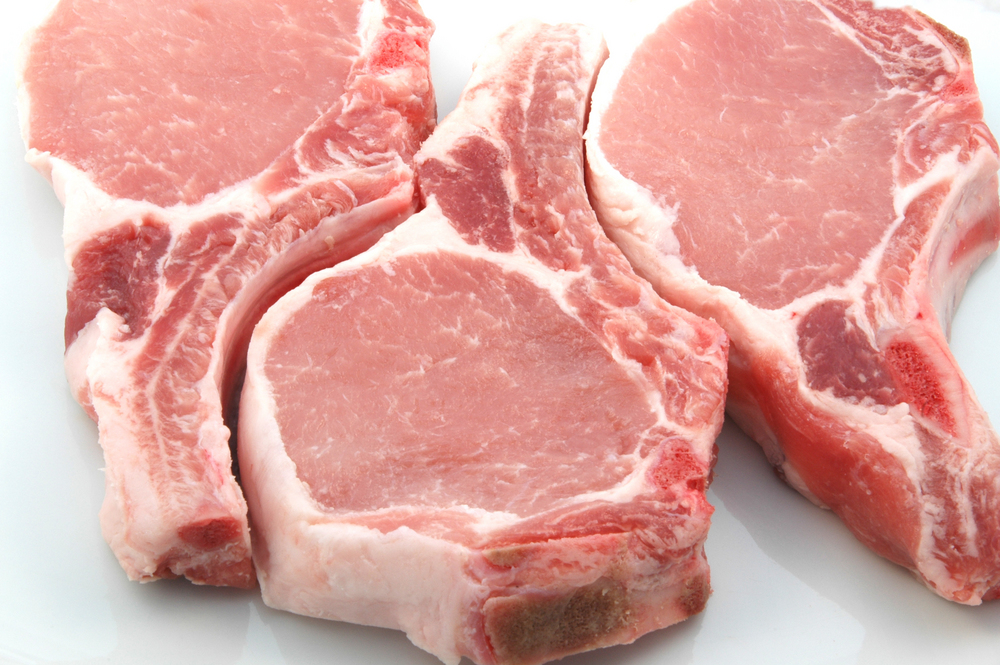
pork chop 1How many of us are motivated by fear every single day? We’d like to think that we’re lucky enough to live in a society where we don’t feel afraid. In contrast to inhabitants of many war-torn regions we are unlikely to be shot as we drive to work; when we’re sick we have the luxury of modern medical attention (Obamacare not withstanding); and we can buy almost any food we fancy, at any time of year and feel safe in our food choices… or can we?

Food safety is an underlying assumption of dietary choice within the USA. We buy food based on three major factors: taste, price and nutrition. Safety isn’t a defining factor in choosing between the cheese quesadilla, the chef’s salad or the T-bone steak because most of us have rarely experienced significant negative health effects as a consequence of food choice (aside from the annual Thanksgiving food coma).

Yet so many food commentators, self-proclaimed experts (I read Michael Pollan therefore I am…) or bloggers appear to exist for the sole purpose of instilling consumer fear. Take this recent article in Salon – 9 reasons why we should fear eating steak – apparently it’s riddled with antibiotics, full of heavy metals and likely to give us all mad cow disease. I’m not going to turn this blog post into a thesis, so today will simply address one of the issues raised in the article, and examine the others in future posts.

I’m a scientist by training. In my career to date, I’ve learned that the more controversial the topic, the more important it is to base claims on sound data that is peer-reviewed and published in order to gain trust. If I present data that challenges perceptions, the first questions are always “Is this published in a peer-reviewed journal? Who funded it? How do I know it’s correct?” That is not to say that science is the only way to communicate – it’s not. Yet when making claims, it’s important to have science, or at least logical and biologically-feasible arguments, to back them up.

Yet, if we’re asking a question, even if it’s a loaded question that may instill fear or doubt into the reader, apparently scientific foundation is redundant. Could combining coffee and bagels in the same meal cause impotence? Is breast cancer caused by the rise in popularity of household pets sleeping on their owners’ beds? Is your tiredness really the result of too little sleep, or could it be all the chemicals that “big food” uses every single day? Hey, I’m just asking! Not making a claim, not saying that X + Y = Z, just throwing the thoughts out there. But having read them, how many of us now are thinking about our sexual performance, the potential ill-effects of Fluffy the cat, or how we really do seem to be more tired nowadays? (note that these really are examples that I have invented, I know of no scientific foundation for any of them).

Possibly the most damaging line in the Salon article contained no data. No scientific foundation. Just a question:

Could Ractopamine, added to the food supply in 1997 with little public awareness1, be contributing to skyrocketing rates of obesity and hyperactivity in children?

The FDA approved the use of Ractopamine in swine in 1999. It’s added to the diet of finishing pigs, improving feed efficiency and partitioning more feed nutrients into lean meat rather than fat (as demanded by today’s consumer). Effectively it allows us to produce more pork using fewer resources, but it has been linked to behavioral changes in pigs.

Most of us are aware that childhood obesity is a huge issue (pardon the pun). Many of us know children that have been diagnosed as having attention deficit hyperactivity disorder (ADHD). So does Ractopamine cause these? It’s as likely as suggesting that eating alfalfa hay is going to make us lactate like dairy cows.

Maximum residue limits (MRLs) exist to make sure that there are no human physiological effects of veterinary drugs in meat, milk or eggs from treated animals. Regulatory bodies including CODEX assess potential human effects of a drug residue in animal products by multiplying the average residue level in food by the average intake. For example, if the residue level is 2 micrograms per 100 grams and the average person eats 300 grams of that food each day, the intake would be 6 micrograms. This intake is then compared to the acceptable daily intake (ADI) – the quantity that could be eaten every day for a lifetime without human health risk. This is usually the intake that would have a physiological effect, divided by a safety factor of one hundred. The MRL for Ractopamine in meat is 0.25 parts per million (0.00000025 grams per gram) with an ADI of 1.25 micrograms per kg of bodyweight per day.

If we examine the average pork intake for a 10 year old child in the USA (detailed calculation below) we see that they’d have to eat 13.3x more pork than the daily average to even equal the ADI – remember that’s the intake at which we would expect no physiological effect. For Ractopamine to have a physiological effect, the ADI would have to be increased one-hundred-fold. So the average 10-year old child would have to eat 1,330x more than the average child’s intake of pork, equivalent to 35 lbs of pork per day, every single day (the average adult only eats 48 lbs of pork in a year), for Ractopamine to have a health effect. My little nieces adore pork sausages, but they are pushed to eat two (approx 2 oz) in a day, let alone 35 lbs worth!

Still think that we can link Ractopamine use to obesity and ADHD? We can’t prove a negative, but it’s as tenuous a link as suggesting that we could drown in a single drop of water. So why are public health “experts” like Martha Rosenberg using fear tactics to scare us rather than extolling the positive contributions that high-quality animal proteins make to the human diet? Surely there’s no agenda there….is there?

1Note that all the data relating to this is freely-available on the internet – the “little public awareness” line is simply more fear-mongering.

Details of Ractopamine calculation

Let’s examine an average child’s intake. The average 10-year-old boy in the USA weighs 32 kg (71 lbs) and needs 34 grams of protein each day. In the USA, meat contributes about 40% of protein intake and about 21% of that comes from pork. That means, on average, a 10-year-old boy would eat about 12 g of pork per day (2.9 g protein).

If Taylor eats 12 g of pork each day at the maximum residue limit of Ractopamine (note that this would be unusually high), he’s consuming 12 g x 0.25/1,000,000 = 0.000003 g Ractopamine. His ADI = 1.25 micrograms x 32 kg bodyweight = 40 micrograms, or 0.00004 grams. That’s 13.3x higher than his intake. So a child could eat 13.3x more pork than average, every single day, and not be expected to have any physiological effects. For ingested Ractopamine to have a physiological effect he would have to eat 100 times that amount – 16 kg, or 35 lbs of pork per day. To put that into context, the average adult eats 48 lbs of pork in a year.

Putting Ourselves in the Cow’s Hooves?

Angus heiferIf you could walk like a cow, look like a cow, experience what it’s like for a cow to go to slaughter, would you eat less meat*?

Stanford researchers are trying to answer this question by putting people on their hands-and-knees and giving them a virtual reality helmet so that they see themselves as a cow on her way to slaughter, then documenting whether their meat consumption changes over the following week.

I am no psychology scholar, but surely the short-term response to such an ill-conceived experiment would be “heck yeah!” providing that the participant didn’t have a psychopathic-level lack of empathy? As humans, we are well-equipped to understand short- and long-term consequences, we know that the interaction between a cull cow and a captive bolt is unlikely to end happily, and just the atmosphere of a slaughterhouse would be enough to turn many people’s stomachs.

So, is this research addressing a crucial knowledge gap? After all, many of us want to know more about the food that we eat each day – perhaps being able to empathize with a cow would help us make better choices? I suspect that if all those who routinely buy grass-fed dairy or beef “experienced” life as a pasture-fed dairy cow on a rainy February day in upstate New York might change their mind about the relative welfare benefits of housing vs. pasture.

Alas no, this is less about animal-human interactions, and more about reducing the perceived environmental impact of our dietary choices. The head researcher states that: “In this case, empathy toward the animal also coincides with an environmental benefit, which is that [not eating] animals consumes less energy.”

Here’s a thought. Let’s all embrace our inner cows and reduce our meat consumption accordingly – we could make it yet another rationale for adopting Meatless Mondays! We’ll cut the US’s national greenhouse gas emissions by less than one-third of one percent but it’ll make us feel better about ourselves as we tuck into our salad sandwich.

Just one thing though – the wheat harvested to produce that bread caused the death of 25x more animals than are killed to produce a lb of meat. Time to don the virtual reality helmet again and see yourself as a fieldmouse with a combine harvester bearing down on you… I’ll take the captive bolt over the combine harvester blades every time thanks.

*Many thanks to Dr. Jennifer Thomson for bringing this article to my attention.

Are We Producing More Food…and Feeding Fewer People?

Waste foodI’m ashamed to admit that the picture to the left is of the lunch table that a media colleague and I left last week – after spending an hour lamenting the fact that in the US, 40% of food is wasted (30% globally). Admittedly, that waste isn’t all down to restaurant portions (in our defense, we both had to fly home, so doggie bags weren’t an option) – however, according to FAO data here, consumer waste accounts for anything between 5% (in Subsaharan Africa) and 39% of total waste (North America and Oceania). The difference (anything from 61% – 95%) is made up from losses between production and retailing.

Losses from production to retail comprise by far the biggest contribution to waste in the developing world, which makes absolute sense – if food is your biggest household cost and hunger is a constant and real danger, the concept of wasting purchased food would seem ridiculous. In the developing world, a myriad of factors play into food insecurity including low agricultural yields, lack of producer education (particularly for women, who are often the main agricultural workers), political instability and military conflict (Pinstrup-Andersen 2000). However, possibly the biggest threat to food security is a lack of sanitary and transport infrastructure (Godfray et al. 2010) – building a milk pasteurization plant is a great opportunity to improve shelf-life, but can only be effective if producers have the facilities to refrigerate and transport milk. Improving tomato yields can reap economic dividends, but if they are transported to markets packed into plastic bags on the back of a bicycle, the wastage is huge. I’m not going to pretend I have the solutions to global food wastage, but what can we do in our own households?

Just as our grandparents learned during WWI and WWII – when food is scarce, you make the most of every single drop of milk or ounce of grain. Yet in the modern developed world, we can afford to waste almost 2/5 of our household food through not understanding expiration dates (cheese does not spontaneously combust into a listeria-ridden ooze at midnight on the day of the expiration date); throwing away the “useless” parts of food waste (radish leaves and wilted celery are actually really good in soup); or simply buying more than we need. In a recent study of greenhouse gases associated with US dairy production, the carbon footprint of a gallon of milk was increased by almost 20% simply because of the amount of “old” milk that consumers poured down the sink each day.

To go back to the picture above, it’s tempting to blame the restaurants – portion sizes tend to be huge, so in this carb-conscious world, it’s not “our fault” if we forgo the last 500 calories by leaving half a plateful of potato chips – they should have just served a smaller portion in the first place, right? Well, maybe. If we’re feeding dairy cows or beef cattle and seeing more than 5-10% feed unconsumed, we’ll reduce the amount fed. I’m sure that exactly the same practice would pay dividends in the restaurant world, and I’d be willing to bet that they could charge exactly the same price.

I spend most of my time myth-busting, showing that the modern beef and dairy industries are far more efficient than the farming systems of 40 or 70 years ago and that we now produce more food using far fewer resources. However, are we really feeding more people if we’re wasting 40% of our food? To suggest that we return to a practice from the WWII era feels almost heretical, but here’s an idea – rather than defining “sustainable” systems as those producing artisan cheeses from heirloom breeds cared for by hemp-wearing liberal arts graduates, why doesn’t every restaurant (or suburb) have a small herd of backyard pigs? Collect the waste food, boil it for 30 min to avoid disease issues, feed to pigs, produce bacon. What could be better? Admittedly, my mother country has banned this practice (I’m beginning to wonder if anything will be permissible in Europe soon), but let’s start the pigswill revolution! Doesn’t “You don’t have to eat that last potato, it’ll make some really good bacon and help us feed those 1 in 7 kids in our local area who don’t have enough food” sound more realistic than “Think of all the starving orphans who would enjoy your PB&J sandwich” (to which the continual smart-a** answer was “I’ll just mail to to them). Let’s do what the livestock industry does best – recycle waste resources to make safe, affordable, nutritous meat!

If Food is the New Religion, Who is the New Messiah?

During the last census in England, there was a social media campaign to persuade people who did not identify with a particular religion, to state “Jedi Knight” in the “religious persuasion” section of the forms. If enough people cited it, it would be officially considered as a religion.

The campaign failed, yet the picture at the top left made me think – just how many people would consider food or “foodieism” to be their religion nowadays? If we consider the concept of “faith” (definition: “complete trust or confidence in someone or something; strong belief in the doctrines of a religion, based on spiritual apprehension rather than proof”), the church sign above appears to explain the behaviors of those who are opposed to specific food production systems or management practices. We can have conversations with the nay-sayers face-to-face, on social media, or even through NY Times competitions, yet if foodieism is a religion, are we wasting our time trying to change their minds with facts?

Fortunately, recent survey data suggests that 94% of consumers buy food on the basis of price, taste and nutrition; 4.4% buy according to lifestyle choices (e.g. organic, vegetarian, local) and only 1.7% are a “fringe” group who wish to prohibit management practices or technologies that have helped us make continuous improvements in food production over the years. Nonetheless, consumers within this small group are extremely vocal, skilled at influencing media and legislation and are devoted to advancing their cause.

Just ask any politician – we can make huge headway influencing the masses in the middle rather than spending time trying to convince a small group to believe in a cause that they are already opposed to. The question is, how do we do so, and how much should we spend time counteracting negative publicity rather than being proactive about food production? If we take the recent lean finely textured beef (LFTB aka. “pink slime”) furor as an example, how many consumers were made aware of the issue not because of negative publicity generated by the media, but because of the huge amount of pushback from our industry via social media? At what point does it make more sense to stay quiet and concentrate our efforts on other issues where we have a chance to move public opinion, rather than fighting losing battles?

Finally, if foodieism is the new religion, who is the new messiah? Michael Pollan, journalism professor preaching food rules and the omnivore’s dilemma? Joel Salatin, wild-eyed prophet of “herbivorous, mob-stocking, solar converting, lignified carbon sequestering, grass-based” systems? Or perhaps Wayne Pacelle, sharp-suited smooth-talker from HSUS? Are PETA billboards and demonstrations the forerunners of foodie door-to-door evangelism? Only time will tell.