
Do Moms Have Instant Beef Credibility?

TrustI spoke at the International Livestock Congress back in January 2012, and at the end of the day, had the pleasure of listening to a couple of distinguished industry colleagues wrapping up the day’s talks in Q&A format. The conversation went thus (with names changed to spare the blushes of the individuals concerned):

Dr. R: “Jude Capper talked about the importance of having credible industry spokespeople to communicate with consumers – how do you suggest that we improve the image of beef sustainability?”

Dr. S: (hitches up his pants, stands up straight): “Well, Jude Capper is credible because she is female…” (pause while the shoulders and eyebrows of 50 or so female graduate students in the audience almost hit the ceiling) “…and she’ll be even more credible when she has children.”

If any one of those graduate students had a gun, a knife or even a sharpened pencil, I think it’s a safe bet that Dr. S would not still be on this earth – the air was so thick with “How dare that chauvinistic old man SAY that?!” it was like spending a weekend in a cigar bar. Yet Dr. S was absolutely right (although he’d probably have fewer voodoo dolls created in his image if he’d explained his statement) – female scientists, especially those who have children, are trusted by female consumers more than the traditional scientific image of an older man in a white lab coat. Why? Well it’s all about how we relate to others. We’re more likely to trust people who seem more like ourselves (age, ethnic group, profession, socioeconomic class) than those with whom we perceive we have little in common. It’s therefore not surprising that recent research (graphs below) shows that we trust our friends and families more than we trust the media, TV shows (take that, Oprah!) or politicians.

Early baby bumpI’m excited to announce that I’m gaining credibility by the day…pound by pound…literally. At almost 7 months pregnant, the most popular question I have at conferences is still “How do I communicate this information to the consumer?”, but it’s swiftly followed by “When is your baby due?”. My baby bump has given me more opportunities for conversations about the importance of beef in pregnancy nutrition with people in airports, on planes and in the grocery store in the past few months than in the rest of my life to date – and I haven’t been the person starting the conversation.

Who do consumers trust 1

Who do consumers trust 2

So what does this mean for communicating with the consumer? Even in these enlightened times, women still make the bulk of food-buying decisions, so we need to specifically target the female consumer . In almost every talk I do, I urge farmers and ranchers to put photos, videos and status updates on Facebook and Twitter so that they can reach their crazy cousin, unsure uncle or doubting daughter, living in a far-off city, with positive messages about agriculture. This time, I’m widening the net – if you happen to be male*, please also ask  your wife, girlfriend, daughter, mother, granddaughter or niece to post and let the female consumer know why we do what we do every day, why beef is a great choice for our families, and why we spend time for caring for baby calves almost as if they are our own children. If you’re female… well, have at it! There are already some excellent blogs out there from women in the livestock industry (e.g. DairyCarrie, The South Dakota CowgirlFeedyard Foodie, Mom at the Meat CounterThe Real Farm Wives of America and The Pinke Post) – let’s push back against all the tide of anti-meat or anti-conventional agriculture misinformation with more real-life experiences from the parents of the next generation of farmers, ranchers and consumers.

*Note that I am NOT suggesting that only women should blog or post on social media! This is simply about making that female-female connection that, whether we like it or not, does promote an instant degree of trust
Scare Tactics – Why Do So Many “Public Health Experts” Promote Fear vs. Food?

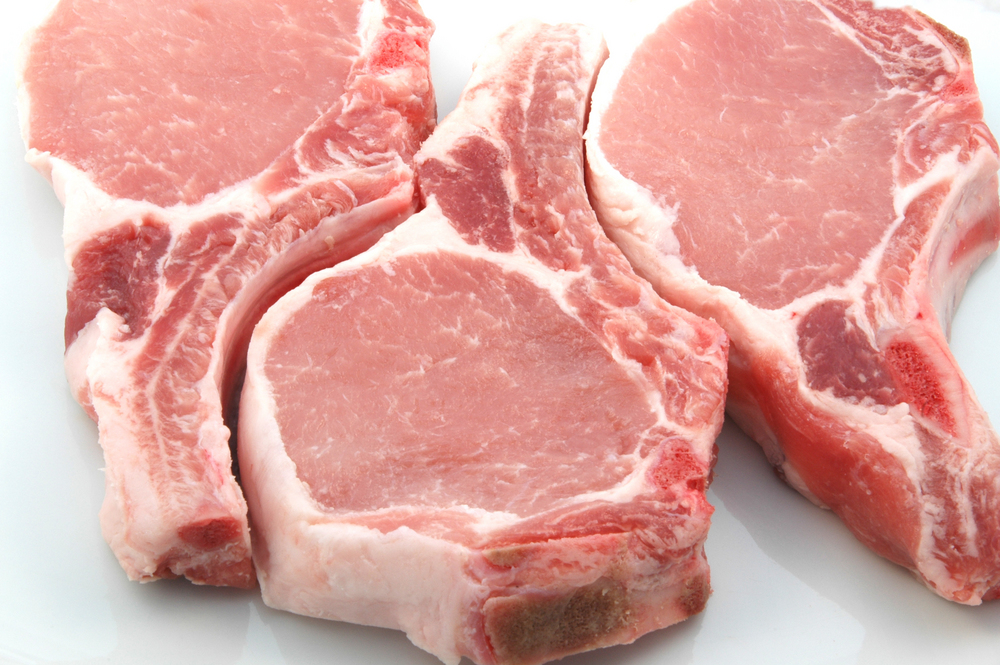
pork chop 1How many of us are motivated by fear every single day? We’d like to think that we’re lucky enough to live in a society where we don’t feel afraid. In contrast to inhabitants of many war-torn regions we are unlikely to be shot as we drive to work; when we’re sick we have the luxury of modern medical attention (Obamacare not withstanding); and we can buy almost any food we fancy, at any time of year and feel safe in our food choices… or can we?

Food safety is an underlying assumption of dietary choice within the USA. We buy food based on three major factors: taste, price and nutrition. Safety isn’t a defining factor in choosing between the cheese quesadilla, the chef’s salad or the T-bone steak because most of us have rarely experienced significant negative health effects as a consequence of food choice (aside from the annual Thanksgiving food coma).

Yet so many food commentators, self-proclaimed experts (I read Michael Pollan therefore I am…) or bloggers appear to exist for the sole purpose of instilling consumer fear. Take this recent article in Salon – 9 reasons why we should fear eating steak – apparently it’s riddled with antibiotics, full of heavy metals and likely to give us all mad cow disease. I’m not going to turn this blog post into a thesis, so today will simply address one of the issues raised in the article, and examine the others in future posts.

I’m a scientist by training. In my career to date, I’ve learned that the more controversial the topic, the more important it is to base claims on sound data that is peer-reviewed and published in order to gain trust. If I present data that challenges perceptions, the first questions are always “Is this published in a peer-reviewed journal? Who funded it? How do I know it’s correct?” That is not to say that science is the only way to communicate – it’s not. Yet when making claims, it’s important to have science, or at least logical and biologically-feasible arguments, to back them up.

Yet, if we’re asking a question, even if it’s a loaded question that may instill fear or doubt into the reader, apparently scientific foundation is redundant. Could combining coffee and bagels in the same meal cause impotence? Is breast cancer caused by the rise in popularity of household pets sleeping on their owners’ beds? Is your tiredness really the result of too little sleep, or could it be all the chemicals that “big food” uses every single day? Hey, I’m just asking! Not making a claim, not saying that X + Y = Z, just throwing the thoughts out there. But having read them, how many of us now are thinking about our sexual performance, the potential ill-effects of Fluffy the cat, or how we really do seem to be more tired nowadays? (note that these really are examples that I have invented, I know of no scientific foundation for any of them).

Possibly the most damaging line in the Salon article contained no data. No scientific foundation. Just a question:

Could Ractopamine, added to the food supply in 1997 with little public awareness1, be contributing to skyrocketing rates of obesity and hyperactivity in children?

The FDA approved the use of Ractopamine in swine in 1999. It’s added to the diet of finishing pigs, improving feed efficiency and partitioning more feed nutrients into lean meat rather than fat (as demanded by today’s consumer). Effectively it allows us to produce more pork using fewer resources, but it has been linked to behavioral changes in pigs.

Most of us are aware that childhood obesity is a huge issue (pardon the pun). Many of us know children that have been diagnosed as having attention deficit hyperactivity disorder (ADHD). So does Ractopamine cause these? It’s as likely as suggesting that eating alfalfa hay is going to make us lactate like dairy cows.

Maximum residue limits (MRLs) exist to make sure that there are no human physiological effects of veterinary drugs in meat, milk or eggs from treated animals. Regulatory bodies including CODEX assess potential human effects of a drug residue in animal products by multiplying the average residue level in food by the average intake. For example, if the residue level is 2 micrograms per 100 grams and the average person eats 300 grams of that food each day, the intake would be 6 micrograms. This intake is then compared to the acceptable daily intake (ADI) – the quantity that could be eaten every day for a lifetime without human health risk. This is usually the intake that would have a physiological effect, divided by a safety factor of one hundred. The MRL for Ractopamine in meat is 0.25 parts per million (0.00000025 grams per gram) with an ADI of 1.25 micrograms per kg of bodyweight per day.

If we examine the average pork intake for a 10 year old child in the USA (detailed calculation below) we see that they’d have to eat 13.3x more pork than the daily average to even equal the ADI – remember that’s the intake at which we would expect no physiological effect. For Ractopamine to have a physiological effect, the ADI would have to be increased one-hundred-fold. So the average 10-year old child would have to eat 1,330x more than the average child’s intake of pork, equivalent to 35 lbs of pork per day, every single day (the average adult only eats 48 lbs of pork in a year), for Ractopamine to have a health effect. My little nieces adore pork sausages, but they are pushed to eat two (approx 2 oz) in a day, let alone 35 lbs worth!

Still think that we can link Ractopamine use to obesity and ADHD? We can’t prove a negative, but it’s as tenuous a link as suggesting that we could drown in a single drop of water. So why are public health “experts” like Martha Rosenberg using fear tactics to scare us rather than extolling the positive contributions that high-quality animal proteins make to the human diet? Surely there’s no agenda there….is there?

1Note that all the data relating to this is freely-available on the internet – the “little public awareness” line is simply more fear-mongering.

Details of Ractopamine calculation

Let’s examine an average child’s intake. The average 10-year-old boy in the USA weighs 32 kg (71 lbs) and needs 34 grams of protein each day. In the USA, meat contributes about 40% of protein intake and about 21% of that comes from pork. That means, on average, a 10-year-old boy would eat about 12 g of pork per day (2.9 g protein).

If Taylor eats 12 g of pork each day at the maximum residue limit of Ractopamine (note that this would be unusually high), he’s consuming 12 g x 0.25/1,000,000 = 0.000003 g Ractopamine. His ADI = 1.25 micrograms x 32 kg bodyweight = 40 micrograms, or 0.00004 grams. That’s 13.3x higher than his intake. So a child could eat 13.3x more pork than average, every single day, and not be expected to have any physiological effects. For ingested Ractopamine to have a physiological effect he would have to eat 100 times that amount – 16 kg, or 35 lbs of pork per day. To put that into context, the average adult eats 48 lbs of pork in a year.

Are We Increasing Resource Use and Taking Beef from the Mouths of Hungry Children?

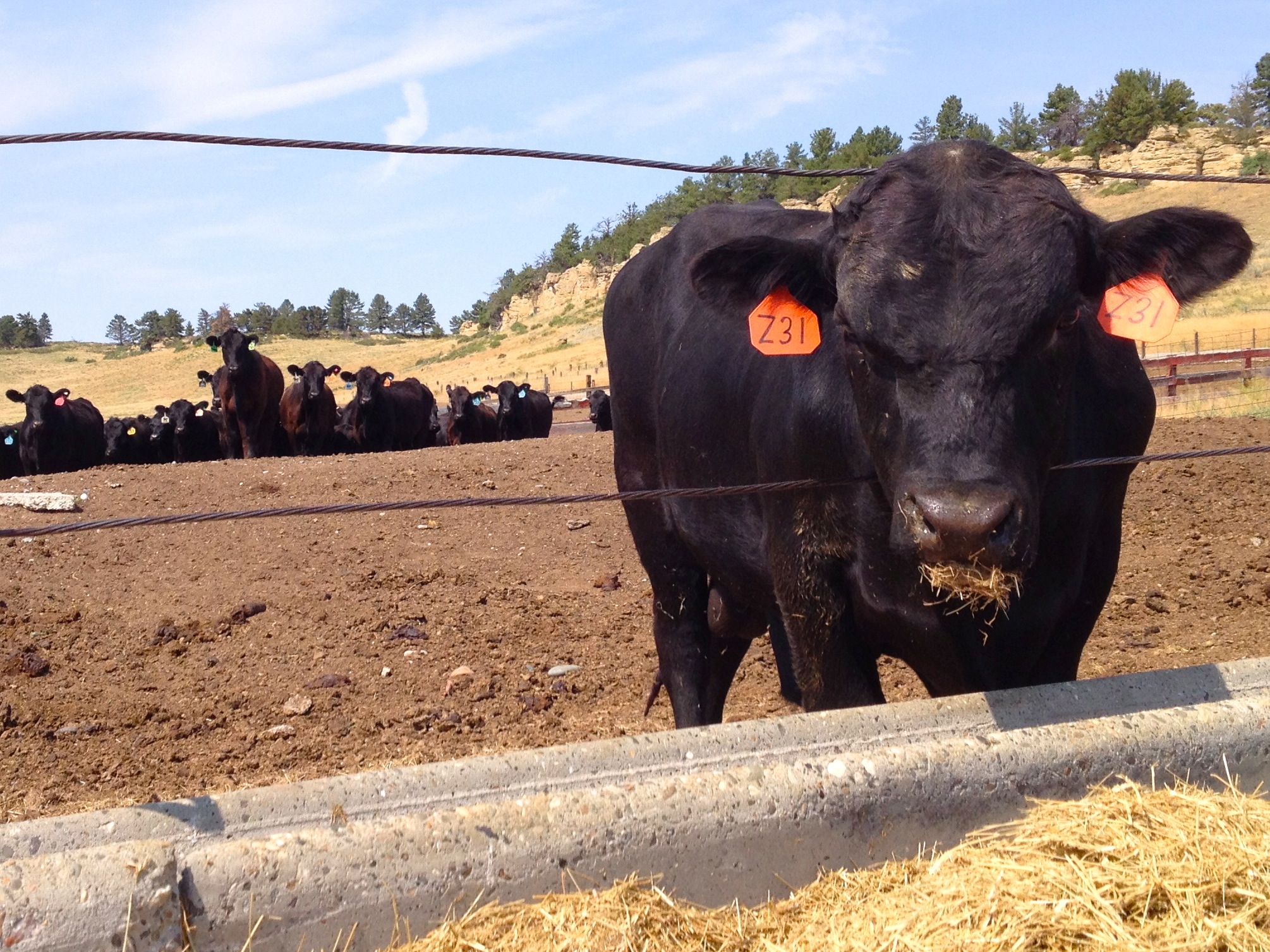
Bull eatingCan we really afford to lose the sustainability advantages that productivity-enhancing tools provide?

Beta agonists have been a hotly debated topic in the media recently, after it was suggested that the use of Zilmax™ might be related to welfare issues in supplemented cattle (see note 1), and Tyson announced that they would not purchase cattle produced using the feed supplement.

As the global population increases and consumer interest in food production sustainability continues to grow, we know that to maintain the continuous improvements in beef sustainability that we’ve seen over the past half-century, we need to ensure that economic viability, environmental responsibility and social acceptability are all in place. All cattle producers obviously have the choice as to what tools and practices are used within their operation, but what are the big picture environmental and economic implications of removing technology use from beef production? Let’s look at two tools – beta agonists and implants (see note 2 below for an explanation of these tools).

Figure 1. Extra Cattle NeededIn a traditional beef production system using both tools, we’d need 85 million total cattle (see note 3) to maintain the U.S. annual production of 26 billion lbs of beef (see note 4). If we removed beta-agonists from U.S. beef production we’d need an extra 3.5 million total cattle to support beef production; losing access to implants would require an extra 9.9 million cattle; and removing both tools would increase total cattle numbers to 100 million (a 15 million head increase) to maintain the current beef supply (see note 5).

If we need more cattle to maintain beef supply, we use more resources and have a greater carbon footprint.

If we removed beta-agonists, we would need more natural resources to maintain U.S. beef production:

  • More water, equivalent to supplying 1.9 million U.S. households annually (195 billion gallons)
  • More land, equivalent to an area just bigger than Maryland (14.0 thousand sq-miles)
  • More fossil fuels, equivalent to heating 38 thousand U.S. households for a year (3,123 billion BTU)

If we removed implants, we would need more natural resources to maintain U.S. beef production:

  • More water, equivalent to supplying 4.5 million U.S. households annually (457 billion gallons)
  • More land, equivalent to the area of South Carolina (31.6 thousand sq-miles)
  • More fossil fuels, equivalent to heating 45 thousand U.S. households for a year (3,703 billion BTU)

If we removed both beta-agonists and implants, we would need more natural resources to maintain U.S. beef production:

  • More water, equivalent to supplying 7.3 million U.S. households annually (741 billion gallons)
  • More land, equivalent to the area of Louisiana (51.9 thousand sq-miles)
  • More fossil fuels, equivalent to heating 98 thousand U.S. households for a year (8,047 billion BTU)

Water infographic

Land infographicFuel infographicBeef production costs would also increase if these tools weren’t used. Feed costs would increase by 4.0% without beta-agonists, 8.1% without implants and 11.0% without both tools. These costs ultimately would be passed on through every segment of the beef supply chain (including the retailer or food service segment) and ultimately onto the consumer, making beef a less-affordable protein choice.

In a world where one in seven children currently do not have enough food, keeping food affordable is key to improving their health and well-being. If we use productivity-enhancing tools in one single animal, the extra beef produced is sufficient to supply seven schoolchildren with their beef-containing school meals for an entire year. Is that a social sustainability advantage that we can afford to lose?

Although animal welfare is paramount for all beef production stakeholders from the cow-calf operator to the retailer, it is possible that the consumer perception of productivity-enhancing tools  may be harmed by negative comments on media articles relating to Zilmax™. There is no doubt that we will need to use technologies within food production in order to feed the growing global population, yet we need consumer acceptance of both the technologies that we use, and the reasons why we use them, in order to continue to secure market access for U.S. beef.

Consumer acceptance therefore needs to be a key component of our mission to continuously improve beef sustainability. That does not mean giving in to the uninformed whims of those who blithely assert that we could feed the world by returning to the production systems of the 1940’s or ’50s, but does offer an opportunity to reach out, listen to and engage in a dialogue with our friends, family, customers and colleagues about the advantages that technology offers. We have a bright future ahead, but only if we keep the torch alight.

To read more conversation about the use of technologies within beef production (including the real-life experiences of feedyard operators who use these tools) and for facts and figures relating to beef production, please check out the following websites: Feedyard Foodie, Ask a FarmerFacts About Beef, and the U.S. Farmers and Ranchers Alliance.

Footnotes

1) Merck Animal Health have since pledged to conduct a thorough investigation into the issue and have temporarily suspended Zilmax™ sales in the U.S. and Canada.

2) Beta agonists are animal feed ingredients that help cattle maintain their natural muscle-building ability and add about 20-30 pounds of additional lean muscle instead of fat. Implants (sometimes called growth promotants or growth hormones), are placed into the ear and release hormones slowly, helping cattle maintain natural muscle-building ability while also decreasing the amount of fat gained. 

3) Includes beef cows, calves, bulls, replacement animals, stockers and feedlot cattle plus calves and cull cows from the dairy system.

4) Although this is a considerable amount of beef, it’s still not enough to fulfill current demand for beef in the USA and overseas. 

5) This work was presented as a poster at the Joint Annual Meeting of the American Dairy Science Association and American Society of Animal Science in Indianapolis, IN in July 2013. The poster is available for download here