Passionate about sustainability and livestock production, dedicated to giving farmers and food industry stakeholders the data and messages to explain why we do, what we do, every single day.
When I visualize vegans* with kids (and I apologize in advance for the stereotyping but after all, this is a visualization), I have an image of a couple similar to my childhood friend Molly’s** parents. A pair of liberal arts majors, in favor of trying to have rational discussion with a toddler who’s beating her fists on the floor as she has a tantrum in the middle of Safeway, he had a huge beard, she wore hemp and they were both passionately devoted to both Molly’s education and her right to make rational choices as she developed into a miraculous human being.
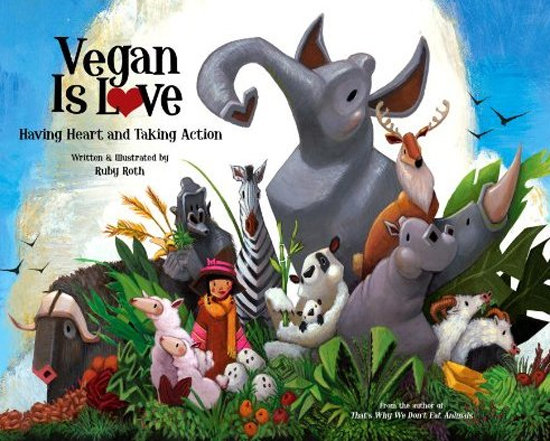
So imagine my surprise when the latest kids book de jour isn’t the beautiful and life-affirming “Guess How Much I Love You“, but “Vegan is Love” a charming tale that paints graphic pictures of the perceived violence that farm animals undergo during slaughter and effectively paints all omnivorous kids as Manson-esque murderers. Reviews on Amazon.com include “Leaping and bounding toward a more peaceable world…” from singer Jason Mraz and similar compliments from the founders of Animal Acres and Farm Sanctuary. Nicely done vegan activists – get the Mommy guilt going and start a “you eat meat so you’re a murderer, get out of my sandbox” clique going in kindergarten.
I never fail to be amazed by just how narrow-minded the focus is of those opposed to animal agriculture, despite their assumed “peace, love and tolerance for all living creatures stance”. Can you imagine the consequences if a similar children’s book was published detailing the horrible life of little Trevor, born with developmental problems due to a severely restricted maternal diet during pregnancy? There would be outrage – how dare the meat-eating majority pick on a vegetable-eating minority… The funny thing is, I’ve yet to hear any omnivorous acquaintance ever seriously assert that vegetarians or vegans should be made to eat meat. Yet the activist vegan contingent are determined to pass their “morals” (note that’s ethical morals, not the delicious fungal morels) onto omnivores and impose dietary choices upon them.
Some states already have abstinence-only sex education, and many schools have “Meatless Mondays”, so what’s next? Vegan-only high school nutrition classes? Herbivorous zoology (no carnivores allowed)? The tale of the loaves and fishes rewritten as the loaves and the three-bean-and-lentil-surprise? Only 1.7% of the population may be actively complaining against modern food production, but they’re not just banging the drum, they’ve hired the whole darn band.
*Before I’m accused of being a meat industry zombie or other such nonsense, I should confess that I was a vegetarian and then a strict vegan from the age of 15-17. I actually turned orange from a sensitivity to beta-carotene.
I recently had the pleasure of watching the 1973 movie Soylent Green starring Charlton Heston. I won’t spoil the ending for those who havent seen it, but the overarching premise of a big company controlling the food supply to an hungry, overcrowded future population strongly resembles some of the current claims made by the more vehement foodies. The anti-animal-agriculture activists appear to have a similar agenda – if only food production was “sustainable” (a word with a million definitions) without any of those “factory farms (that) pose a serious threat to health” and red meats that “have been linked to obesity, diabetes, cardiovascular disease, and certain types of cancer“, life would be much sweeter.
So what’s the answer? It’s very simple. All that animal feed could simply be fed to humans. According to Pimentel at Cornell University, 800 million people could be fed with the grain that livestock eat in the USA each year. If we ignore the fact that field corn (fed to livestock) is not the same as sweet corn (the corn on the cob that we eat), and assume that field corn could easily be processed into a human foodstuff, Pimentel is right.
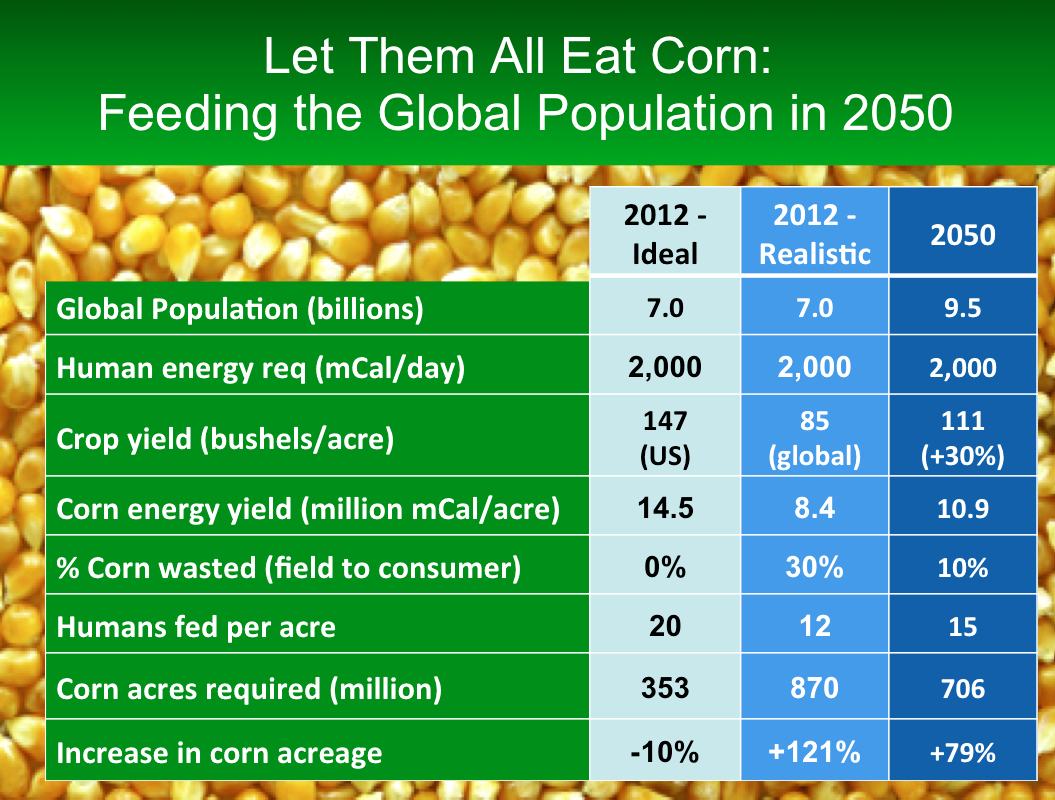
Given the average human nutrient requirement (2,000 kCal/day) and the energy yield of an acre of shelled corn (14.5 million kCal), one acre of corn (at 2011 US yields) could supply 20 people with their energy needs (see table below). On a global basis, we currently harvest around 393.5 million acres of corn, therefore we could supply the entire current global population (7.003 billion) using only 90% of the global corn area. Of course that’s assuming zero waste and US crop yields. If we use a more realistic scenario with global corn yields (85 bushels/acre) and 30% food wastage, we can only feed 12 people per acre and would need to increase current corn acreage by 121% to produce enough food to supply the current population. So what happens by the year 2050 when the population is predicted to reach 9.5 billion people? Assuming that we continue to see increases in yield proportional to those over the past 30 years (30% increase in US yields since 1982), that yield increases are exhibited globally, and that we can cut food waste to 10%, we could feed 15 people per acre and we’ll need to increase corn acreage by 79% to provide sufficient corn to feed the global population.
If our dietary requirements can be met by corn alone, the increase in land use won’t be an issue – land currently devoted to soy, peanuts or wheat can be converted to corn. Yet this simplistic argument for vegetarian/veganism suffers from three major flaws. Firstly, it assumes that the global population would be willing to forgo lower-yielding vegetable crops that add variety to the diet – where are the artichokes, kale or radishes in this dietary utopia?
Secondly, as noted by Simon Fairlie in his excellent book, converting to a vegan monoculture would significantly increase the reliance on chemical fertilizers and fossil fuels due to a lack of animal manures. Given current concern over dwindling natural resources, this is an inherently unsustainable proposition.
Finally, corn is currently vilified by many food pundits. The suggestion that our food supply is controlled by corporations who force monoculture corn upon hapless farmers who are then faced with the choice of complying with big ag or being forced out of business are the purview of food pundits (e.g. Michael Pollan and Joel Salatin) and documentaries such as Food Inc. and King Corn. Not a week goes by without another Mommy blogger or journalist publishing an article on the dangers of high-fructose corn syrup, often concluding that if only this ingredient was removed from our food supply, childhood obesity and pediatric type II diabetes would cease to be an issue for little Johnny and Janie pre-schoolers of the future.
It’s frighteningly easy to visualise the Soylent Green-esque vegan future, whereby food is doled out in pre-measured quantities according to dietary requirements – yet what happens when the whistle-blower of 2050 proclaims “it’s made from CORN!”?
I know Harvard researchers are smart, I really do. Yet I have to question the latest study reporting that eating red meat is associated with premature death. Published in the Archives of Internal Medicine, the paper analyzed the relationship between mortality and red meat consumption in a total of 121,342 healthcare professionals and concluded that:
Greater consumption of unprocessed and processed red meats is associated with higher mortality risk… replacement of red meat with alternative healthy dietary components may lower the mortality risk.
As a researcher, I know full well that it’s almost impossible to prove a cause-effect relationship. This is particularly difficult in human studies where other dietary and lifestyle factors have to be accounted for. After all, if you have ketchup on your steak, does the lycopene prevent against prostate cancer? “Associated with” is therefore absolutely the correct terminology for the paper’s authors to use. Alas, in the minds of so many, “associated with” translates to “causes” (especially when it’s a bad news story), and everybody panics accordingly.
The results of this report need to be put into context with our other lifestyle choices. If, as reported, eating unprocessed or processed red meat increases the relative risk of mortality by 13% and 20% respectively, how does that compare to all our other daily activities – driving a car, drinking a glass of wine or eating a candy bar? How do we weigh the risk of consuming a steak or slice of pepperoni pizza against the bottle of Mountain Dew or unwashed raw carrot? After all, during the BSE crisis in the UK, data suggested that the risk of dying from falling out of bed and suffering a fatal head injury was far greater than that from contracting vCJD, yet there was immense consumer concern relating to the perceived dangers of beef consumption.
Relative risk is not a measure that many people understand. Within this study, the absolute mortality risks (i.e. the probability of any one person dying) paint a rather different picture. Out of every 100 men, 1.23 men consuming three servings of unprocessed meat (the equivalent of one 9-oz steak) per week were likely to die, versus 1.30 men eating 6 oz of processed meat (bacon, sausage etc) per day (42 oz per week). Given the small difference in those mortality risks (which were similar for women) yet the huge difference (9 oz vs. 42 oz) in weekly meat consumption, we would be better served by focusing more on other factors (bodyweight, exercise, genetic propensity to specific diseases) that contribute the vast majority of our absolute mortality risk rather than assuming that we can live forever if we only replace a hamburger with a vegetarian meatloaf.
Since this study hit the headlines my Facebook newsfeed predictably been over-run by anecdotes about grandparents who lived to the ripe of age of 101 years while eating bacon and eggs for breakfast, corned-beef hash for lunch and three pork chops (with extra heavy cream in the whipped potatoes) for dinner. Without wishing to be flippant, the one certainty in this life is that we’ll all die at some point – if I restricted my meat intake to the suggested 3 oz per day (or less) I have a sneaking feeling that I might not live forever, but it’d sure feel like it.
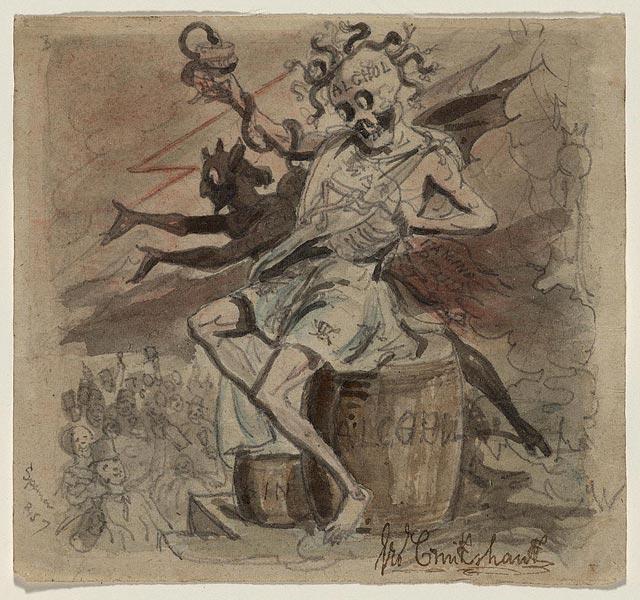
My Grandpa, a strict Methodist, took the pledge to abstain from alcohol back in the 1940’s when the church was endorsing Prohibition via the Temperance movement in the UK. It was an entirely personal choice for him, one that he felt was right for his lifestyle and a cause that he didn’t try to recruit other people to join. Admittedly it filtered down to his children and even had some influence on his grandchildren, although for my brothers, cousins and me the effect is now somewhat akin to adding a single ice-cube to a tumbler of whiskey.
In 1889, George Sim described slum areas where drinking was commonplace thus:
The gin-palace is heaven to them compared to the hell of their pestilent homes… The drink dulls every sense of shame, takes the sharp edge from sorrow, and leaves the drinker for awhile in a fools’ paradise… It is not only crime and vice and disorder flourish luxuriantly in these colonies, through the dirt and discomfort bred of intemperance of the inhabitants, but the effect upon the children is terrible. The offspring of drunken fathers and mothers inherit not only a tendency to vice, but they come into the world physically and mentally unfit to conquer in life’s battle. The wretched, stunted, misshapen child-object one comes upon in these localities is the most painful part of our explorers’ experience. The country asylums are crowded with pauper idiots and lunatics, who owe their wretched condition of the sin of the parents, and the rates are heavily burdened with the maintenance of the idiot offspring of drunkenness.
Given such strong words, it’s not surprising that alcohol was considered by many to be the root of all evil. In this modern world, where a myriad of organizations exist to help us with our addictions to the more insidiously hedonistic pleasures in life*, surely we are beyond taking the pledge?
Alas no, the Environmental Working Group is at it again, this time with a pledge that they aim to get 100,000 supporters to sign. That’s right, you can save the planet by simply clicking a button on the internet stating that:
I pledge to skip meat one day a week and to include more healthy fruits and vegetables in my diet. Not only will I be doing something good for my body, I’ll also be doing something good for the environment.
So, let’s assume 100,000 people sign up for this. That will cut the USA’s carbon footprint by 0.00014% (it would only be 0.44% if the entire population took the pledge *and* actually stuck to it). Hardly a significant environmental effect.
What would you replace meat with? Jack-in-a-Box Jalapeno poppers? A couple of Twinkies? A 1/2 lb soy burger? It’s rational to assume that giving up meat for one day a week will not suddenly cause everybody to have more time to cook, or to prepare fresh exotic salads from scratch – the basic food preferences will stay the same, simply without meat.
So the chicken breast, hamburger or pork chop is replaced by a vegetarian burrito – one from Chipotle no less, which has made a big play of not using rbST and other hormones. According to USDA’s nutrient database, the calorie content of an 8 oz steak is 581 calories with 35 grams of fat. An 8 oz pork chop has 524 calories with 38 grams of fat. The vegetarian burrito? Chipotle lists nutritional information by ingredient, luckily the handy dandy My Fitness Pal website has put together all those ingredients – 750 calories with 27 grams of fat. Hardly a short-cut to becoming a lean, mean fitness machine.
Life is all about choices, and all dietary choices have environmental and health consequences. The Temperance movement believed abstaining from alcohol made for a better life and (via Methodism) a promise of a better afterlife. Can the same really said of abstaining from meat for one day per week? Should meat be renamed Mephistopheles – or is abstention simply another short-term panacea by which we can feel better about our health, environment and karma via bad science and vegetarian spin?
*Personally, I need a “Cinnabon Lovers Anonymous” help-group
Would you replace your hamburger with a soy burger?
Ah, the power of a report from an earnest non-governmental organization, out to save the consumer from themselves. Destined to be selectively quoted for the next 20 years and to prove once and for all that, as the comedian Ron White would say: “You can’t fix stupid”.
Released this week, the Environmental Working Group’s report, claimed not only that everybody should eat less meat, but that “Meat, eggs and dairy products that are certified organic, humane and/or grass-fed are generally the least environmentally damaging…Overall, these products are the least harmful, most ethical choices.” This is a surprisingly intuitive conclusion in that it utterly contradicts the body of scientific knowledge to date, and as the report doesn’t contain any data on anything other than conventional production systems, let alone ethics.
The requisite environmental activist components are there: stylized pastoral scene on the cover and such a liberal sprinkling of emotive words such as “confined” and “polluting” it seems like an ice-cream sundae assembled by a small child with a sugar addiction. It’s even been peer-reviewed by “experts” (as you may have gathered, when reading this post, words in quote marks should be accompanied by an ironic raised eyebrow).
It’s a bona-fide report with colorful graphs, acknowledgements, a whole separate report on the methodology (which guarantees nobody will read it) and data! As we all know, data is powerful. According to their “calculations”, lamb has the greatest impact, generating 39.3 kg (86.4 lbs) of carbon dioxide equivalents (CO2e) for each kilo eaten, and beef has the second-highest emissions, generating 27.1 kilos (59.6 lbs) of CO2e per kilo consumed. Cheese generates the third-highest emissions, 13.5 kilos (29.7 lbs) of CO2e per kilo eaten. Everybody knows that data doesn’t lie. Cold hard numbers are based on science. Yet just as I can replace ground beef with tofu and make something that looks like a burger, yet tastes like… soy, so has the EWG have used poor-quality data and erroneous assumptions to create a vegetarian ideology that is a poor substitute for real science.
They claim that if everyone in the U.S. chose a vegetarian diet, it would reduce US carbon emissions by 4.5%. This is an impressive achievement since the Environmental Protection Agency cites livestock production (including dairy, eggs and horses) in the US as accounting for 3.12% of total emissions. Who knows where that extra 1.4 percent comes from?
The animal component of the report shows a lamentable lack of basic livestock production knowledge. In the beef example, the cow-calf and stocker operations are based on a lot feeding system in Nebraska rather than rangeland production and by-product/forage feeding. All the animals raised are steers (what on earth happens to the heifers?) and there appear to be no bulls in the system, not to mention the lack of dairy calves entering the feedlot and cull beef or dairy cows entering the production chain. Crucially there is no data on herd dynamics, bodyweights, growth rates, and total time required for animals to reach slaughter weight – the most important factors that affect the carbon footprint of a unit of beef.
The lamb system does contain rams as well as ewes, but there is no data relating to the flock, and most crucially, to the lambing rate. US farm flocks average 1.5 to 2.5 lambs per ewe per year whereas range flocks average 1.0-1.5 lambs per ewe. If we compare this to the US average for beef according to the most recent USDA/NAHMS report of 87% of cows producing a live calf, that means we need roughly twice as many beef cows to produce offspring as we do ewes, even considering the fact that lamb produce slightly less meat per carcass on a percentage basis (for a more realistic estimate of meat yields than those quoted in the EWG report, the University of KY have a nice extension publication on the subject).
So here it is, the issue that every single life cycle assessment involving animals and executed by LCA engineers to date misses – the fact that for every day an animal is alive, it needs a certain amount of energy and protein (and therefore feed, land, fertilizers, fossil fuels etc) simply to stay alive. This is called the maintenance requirement and it’s exactly the same principle that leads to that nifty “The average woman requires 2,000 calories, the average man requires 2,500 calories” credo that’s on almost every nutritional label. It doesn’t take a giant deductive leap to realize that if a certain amount of feed is needed to maintain an animal, there’s going to be a certain amount of waste too – which means manure and greenhouse gases. Breeding animals in meat production are the biggest contributors to the total carbon footprint precisely because they consume resources and emit greenhouse gases each day, yet only end up in the human food chain after a number of years, if at all.
If I’m making a bun for my tofu burger, it’s more efficient to cook it in an oven that can produce two or three buns rather than one. Exactly the same analogy applies to breeding herds – a larger breeding herd with reduced reproductive efficiency (i.e. fewer offspring per female), means more resources and a greater carbon footprint per unit of milk or meat. Lamb’s carbon footprint would be expected to be approximately half to two-thirds that of beef given the greater reproductive efficiency, yet the EWG’s estimation has lamb at 44% higher – a clear reflection of the invalidity of their results.
Comparing the carbon footprint of different meat products is an elegantly futile competition in which nobody wins. According to their “data” beef is a better choice than lamb, chicken is better than pork. Yet who fancies chicken Wellington for dinner? Or egg pot pie? Or a pea McMuffin? The idea that we should be happy, saving the world on a diet of tofu and lentils is somewhat ironic given their propensity to produce increased methane from the human gastro-intestinal tract.
Are all 311 million people in the US going to rush to the grocery store and fulfill the EWG’s somewhat desperate cry for Meatless Mondays? Until all human activity can be put into context and the effect of driving to work vs. buying French wine vs. eating an 18-oz T-bone vs. having a third child can be compared objectively, this report is simply another one-week-wonder, destined to be quoted in every vegetarian manifesto and vegan twitter post (presumably vegans don’t tweet, as that would be exploiting birds?) but forgotten as soon as Katherine Middleton wears a new dress on a royal visit or yet another politician demonstrates their indirect support for the pork industry by increasing Google searches for “wiener”.
For a little light relief, here’s Ron White’s take on “Stupid” (please do not watch if easily offended)
Remember the all-new singing-and-dancing MyPlate? That handy guide to what to eat that only seems to apply to those of us on a discrete meat/starch/veg diet eaten off school cafeteria-style segmented tableware?
Now any Home Economics teacher can easily include MyPlate in the curriculum – with this handy MyPlate food kit!
“This fantastic assortment of food replicas provides you with a wide variety of foods so you can create many different meals on MyPlate or you can use these replicas in conjunction with those you already have on hand.”
Or… you could use real food. You know, so students could learn to prepare and eat it rather than gazing at a plastic molded apple. Just a thought.
I can’t express how much it amuses me that the food kit associated with this first-lady-approved-PC-food-ideology doesn’t include tofu in the protein group.
 When I visualize vegans* with kids (and I apologize in advance for the stereotyping but after all, this is a visualization), I have an image of a couple similar to my childhood friend Molly’s** parents. A pair of liberal arts majors, in favor of trying to have rational discussion with a toddler who’s beating her fists on the floor as she has a tantrum in the middle of Safeway, he had a huge beard, she wore hemp and they were both passionately devoted to both Molly’s education and her right to make rational choices as she developed into a miraculous human being.



 Bovidiva